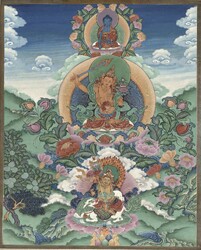
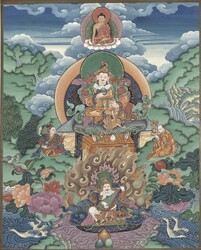
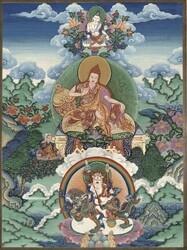
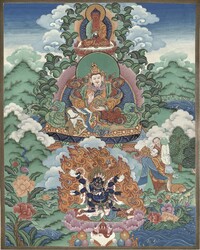
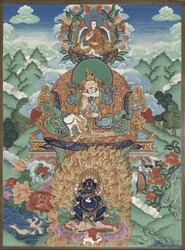
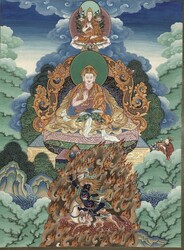
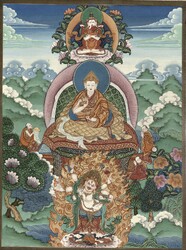
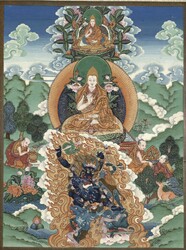
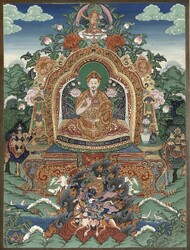
King: Qianlong Emperor Incarnation Lineage
Qianlong Emperor Main PageRelationship Between the Three Pre-incarnation Lineages
Extracted from Li Ruoyu, Associate Research Librarian, Library of the Palace Museum's publication on a set of paintings of the pre-incarnation lineage of The Qianlong Emperor. (Palace Museum, Beijing. Date?).
Image Page: Qianglong Emperor Pre-Incarnations
The previous-life lineage of the Qianlong Emperor is connected, to varying degrees, with the lineages of the Changkya Rolpe Dorje, the Panchen Lamas, and Dalai Lamas. For example, the Qianlong Emperor’s eighth pre-incarnation is identified as Kublai Khan, while the eighth pre-incarnation of the Changkya Rolpe Dorje is Pagpa (’Phags pa), Kublai's principal guru and the fifth patriarch of the Sakya school. In the Panchen Lama lineage, there is a pre-incarnation as Sakya Paṇḍita Künga Gyaltsen, Phagpa’s uncle and the fourth patriarch of the Sakya school; and in the Dalai Lama lineage there is also a pre-incarnation as Künga Nyingpo, the first patriarch of the Sakya school. These correspondences are clearly not coincidental, but indicate that the Sixth Panchen Lama devoted considerable thought and effort when constructing the pre-incarnation lineage of the Qianlong Emperor, incorporating his own political and ideological intentions.
The Sixth Panchen Lama was adept at reading the political situation. With the Changkya Rolpe Dorje acting as an intermediary, he used the occasion of celebrating the Qianlong Emperor’s seventieth birthday to visit Beijing for an audience. During this visit, he personally investigated the spread and development of Tibetan Buddhism along the route, especially in the Gansu–Qinghai and Mongolian regions, and further enhanced its influence through active, firsthand promotion. Appearing before the Qianlong Emperor as the overall representative of Tibetan Buddhism, he sought recognition from the central government and an elevation of his own politico-religious status in Tibet. This clearly shows that, for a regional politico-religious leader in Tibet, politics and religion were inseparable.
In constructing the pre-incarnation lineage of the Qianlong Emperor, the Sixth Panchen Lama not only worked vertically, tracing the emperor back to kings and siddhas who had attained the path, and important masters of the Kadam and Gelug traditions, but also horizontally, establishing subtle connections with the lineages of the Changkya, Panchen, and even the Dalai Lamas. Through the religious discourse of pre-incarnations, he bound sectarian authority to imperial power and, by aligning with imperial authority, expanded the influence of religion.
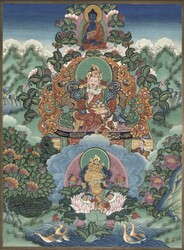
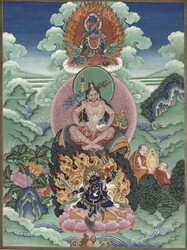
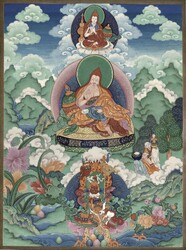
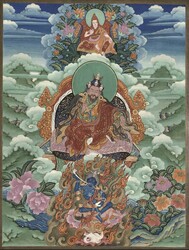
Emperor Qianlong - Pre-Incarnation Lineage (According to the Sixth Panchen, Lobsang Palden Yeshe):
1.King Prasenajit རྒྱལ་པོ་གསལ་རྒྱལ
2. Kusali ཀུ་སྭ་ལི
3. King Buddhapaksha རྒྱལ་པོ་སངས་རྒྱས་ཕྱོགས
4. Muni Tsenpo མུ་ནེ་བཙན་པོ (r. 762–798)
5. The Great Siddha Samayavajra གྲུབ་ཆེན་དམ་ཚིག་རྡོ་རྗེ
6. Legpai Sherab ལེགས་པའི་ཤེས་རབ (1018–1115)
7. Siddha Darchar གྲུབ་ཐོབ་འདར་ཕྱར (12th century)
8. Kublai Khan ཧུ་པི་ལི (1215–1294)
9. Trichen Monlam Pelwa ཁྲི་ཆེན་སྨོན་ལམ་དཔལ་བ (1414–1491)
10. Je Khyab Chog Pal Zangpo རྗེ་སྐྱབས་མཆོག་དཔལ་བཟང་པོ
11. Trichen Jinpa Gyatso ཁྲི་ཆེན་སྦྱིན་པ་རྒྱ་མཚོ (1711–1799)
[12. Qianlong Emperor]
Changkya Rolpe Dorje – Pre-incarnation System (According to the Third Tukwan, Lobzang Chokyi Nyima):
1. Tsunda ཙུནྡ
2. Shakyamitra ཤཱཀྱ་བཤེས་གཉེན
3. Nāgā Darpan དརྤན
4. Kawa Paltseg ཀ་བ་དཔལ་བརྩེགས
5. Zur Shakya Sengge སྒྲོ་ཕུག་པ་ (1074–1134)
6. Sisi Ripa སི་སི་རི་པ (1018–1115)
7. Langtangpa Dorje Sengge གླང་ཐང་པ་རྡོ་རྗེ་སེང་གེ (1054–1123)
8. Chogyal Pagpa འཕགས་པ་བློ་གྲོས་རྒྱལ་མཚན(1235–1280)
9. Lama Dampa Sonam Gyaltsen བླ་མ་དམ་པ་བསོད་ནམས་རྒྱལ་མཚན (1312–1375)
10. Jamchen Choje Shakya Yeshe བྱམས་ཆེན་ཆོས་རྗེ་ཤཱཀྱ་ཡེ་ཤེས (1354–1435)
11. Jetsun Chokyi Gyaltsen རྗེ་བཙུན་ཆོས་ཀྱི་རྒྱལ་མཚན (1469–1544)
12. Paljor Lhundrub དཔལ་འབྱོར་ལྷུན་གྲུབ (1561–1637)
13. 1st Changkya, Dragpa Oser གྲགས་པ་འོད་ཟེར (?–1641)
14. 2nd Changkya, Lobsang Choden བློ་བཟང་ཆོས་ལྡན (1642–1714)
Dalai Lama - Pre-Incarnation + Incarnation System:
1) Avalokiteśvara
2) Songtsen Gampo སྲོང་བཙན་སྒམ་པོ (617–650)
3) Yeshe Od ཡེ་ཤེས་འོད (947–1019 / 1024)
4) Dromtönpa འབྲོམ་སྟོན་པ་རྒྱལ་བའི་འབྱུང་གནས (1005–1064)
5) Künga Nyingpo ཀུན་དགའ་སྙིང་པོ (1092–1158)
6) Sangye Gompa སངས་རྒྱས་སྒོམ་པ (1160–1229)
7) 1st Dalai Lama, Gendun Drub དགེ་འདུན་གྲུབ་པ (1391–1474)
8) 2nd Dalai Lama, Gendun Gyatso དགེ་འདུན་རྒྱ་མཚོ (1475–1542)
9) 3rd Dalai Lama, Sonam Gyatso བསོད་ནམས་རྒྱ་མཚོ(1543–1588)
10) 4th Dalai Lama, Yonten Gyatso ཡོན་ཏན་རྒྱ་མཚོ (1589–1616)
11) 5th Dalai Lama, Ngagwang Lobsang Gyatso ངག་དབང་བློ་བཟང་རྒྱ་མཚོ(1617–1682)
12) 6th Dalai Lama, Tsangyang Gyatso ཚངས་དབྱངས་རྒྱ་མཚོ (1683–1706)
13) 7th Dalai Lama, Kalsang Gyatso བསྐལ་བཟང་རྒྱ་མཚོ (1708–1757)
Panchen Lama - Pre-Incarnation + Incarnation System (According to Tashi Lhunpo Monastery):
1) Subhūti གནས་བརྟན་རབ་འབྱོར
2) Rigden Jampal Dragpa རིགས་ལྡན་འཇམ་དཔལ་གྲགས་པ
3) Lobpon Legden Je སློབ་དཔོན་ལེགས་ལྡན་འབྱེད (6th century)
4) Abhayākaragupta ཨབ་ཀཱ་ར་གུབྟ (11th century)
5) Go Lotsawa Kugpa Lhatse འགོས་ལོ་ཙཱ་བ་ཁུག་པ་ལྷས་བཙས(11th century)
6) Sakya Paṇḍita Künga Gyeltsen ས་སྐྱ་པཎྚི་ཏ་ཀུན་དགའ་རྒྱལ་མཚན (1182–1251)
7) Yonten Dorje Pal གཡུང་སྟོན་རྡོ་རྗེ་དཔལ (1284–1365)
8) 1st Panchen, Khedrub Je མཁས་གྲུབ་དགེ་ལེགས་དཔལ་བཟང་པོ (1385–1438)
9) 2nd Panchen, Sonam Chokyi Langpo བསོད་ནམས་ཕྱོགས་ཀྱི་གླང་པོ (1438–1505)
10) 3rd Panchen, Lobsang Dondrup བློ་བཟང་དོན་གྲུབ (1505–1568)
11) 4th Panchen, Lobsang Chökyi Gyaltsen བློ་བཟང་ཆོས་ཀྱི་རྒྱལ་མཚན(1569–1662)
12) 5th Panchen, Lobsang Yeshe བློ་བཟང་ཡེ་ཤེས་དཔལ་བཟང་པོ (1663–1737)
Shinzo Shiratori 1-2026