Hinayana Buddhism Represented in Tibetan Art
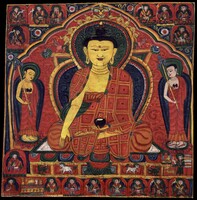
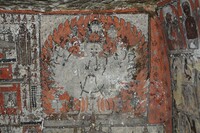
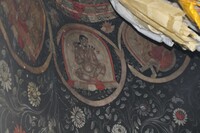
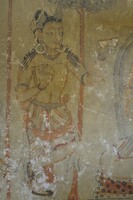
Himalayan and Tibetan Buddhism is generally described as being composed of the three 'Yana' or vehicles, or paths, of Buddhism - the Hinayana, Mahayana and Vajrayana. In painting and sculpture the Hinayana path, the foundation of the other paths, is represented by Shakyamuni Buddha as the central figure surrounded by various students and followers most notably the Sixteen Great Arhats.
The full group, unique to Himalayan and Tibetan style art, has twenty-five figures: the Buddha Shakyamuni, together with the two foremost disciples - Shariputra and Maudgalyayana, the Sixteen Great Arhats, the attendant Dharmatala, the patron Hvashang and the Four Guardian Kings of the Directions: Vaishravana, Virupaksha, Dhritarashtra and Virudhaka. In all an extensive set of paintings would comprise twenty-three individual compositions. The two foremost disciples are generally portrayed in the same painted composition with Buddha Shakyamuni. In sculpture sets the total number of pieces is twenty-five. Early paintings of the group prior to the 14th century generally do not include Hvashang - who was added to the group later.
Twenty-five Figures:
- Shakyamuni Buddha
- Shariputra & Maudgalyayana
- Sixteen Great Arhats
- Dharmatala (attendant)
- Hvashang (patron)
- Four Guardian Kings of the Directions
 It has been very difficult to track down the earliest painted images or sculpture of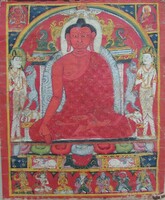
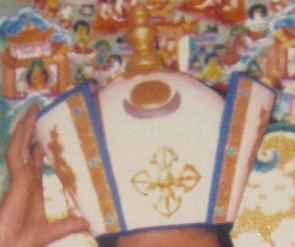 Many have heard of the famous black hat of the Karmapa and the red hat of the Shamarpa, maybe the lotus hat of Padmasambhava and the yellow hat of the Gelugpa Tradition. What about a white hat that is identical to the black hat of Gyalwa Karmapa?
 In the past there have been eight Tsatsa incarnate Lamas. Recently the 9th was recognized as a small child in the area of Lingtsang, Kham. The 7th Tsata Drubgon lived during the exciting time of Jamyang Khyentse Wangpo and